Friday, November 01, 2013

Uncle Milton

How many of you have the chance to work along side of a Hall of Famer almost every day? Not many, I'll bet.

I do. I work with Milt Northrop. Just to make sure there's no confusion, he's the one on the right in the picture.

Usually Hall of Famers are retired from their chosen profession and have moved on to other things, usually golf or gardening. Milt is 76, and he's not going anywhere. When it comes to journalism, the man is a lifer.

What's more, Milt carries large amounts of passion with him wherever he goes and whatever he does. It was evident in one of the first times we encountered each other. Naturally, it was on the softball field in the local media league.

I was pitching for WEBR, and Milt was playing for one of the News teams in that league. Milt hit a ground ball to second, I believe, and I went over to first base in case I was needed on a play. Now this being slow-pitch softball, and this being WEBR, we usually didn't have the depth to put someone at second who could actually field a grounder consistently. So I didn't bother to get particularly near the bag after the ball was kicked into right field.

Out of nowhere, Milt said something like, "Get out of my way, or I'll knock you over!!!!" I thought to myself, if this guy is like this when he is going to first base, what's he like when he's pursuing a story?

I found out at a Bills' game a short time later. One time Milt was interviewing someone in the Bills' locker room by himself. A television interviewer came along, and steered the player away from Milt and toward himself. Milt patiently waited for the TV interview to end - and then exploded at the guy.  Trust me, the TV reporter had it coming.

I eventually discovered that those explosions were quite infrequent, and that Milt was actually pretty charming most of the time. What's more, the man was a walking encyclopedia on anything connected with sports. One year at the Bills' draft, he and I were sitting around with a few others covering the  the draft at Rich Stadium's media room. Now in those innocent days of the early 1980s, we needed to look up a guy in Street and Smith's magazine when anyone got taken after the first round.

New Orleans had a third round pick, and selected Eugene Goodlow, a wide receiver from Kansas State. Milt looked up from his work and said out of nowhere, "Didn't he go to high school at Williamsville South?" Indeed, he did - attending the suburban Buffalo school for a couple of years before moving. Only Milt would know that.

Milt showed his versatility one December day in 1981. The Sabres had completed one of the biggest trades in their history, sending Jim Schoenfeld and Danny Gare among others to Detroit for Dale McCourt, Mike Foligno and Brent Peterson. With my usual sense of timing, I had arranged the Buffalo Evening News football writer - Milt - earlier to be my guest on my talk show. He arrived and I told him we couldn't talk about football on this particular night, and he was welcome to leave (I couldn't reach him by phone beforehand). Milt stayed for an hour, adding good insight into the deal. That was and is Milt - you couldn't stump him. Talking to him was like having the Internet at your disposal without the clumsy sign-on.

It was a skill that proved to be handy some years later. WGR had a trivia show with Chuck Dickerson about four times a year for a few years. We - Milt, Mike Haim, Mike Harrington, Bob Gaughan and I - would take questions, and Milt was always good for coming up with obscure answers. My favorite moment on that show was when someone called in a question about a 1930s hockey player. Since Milt was the senior member of the panel, we liked to kid him about his age. "You covered him, Milt - what sort of player was he?" I asked in a smarty-pants tone. Quick as a flash came the perfect answer - "Good face-off man."

Speaking of stories about talk shows, someone told me how Milt turned up on some radio show a while ago and started telling stories on the air. A listener was on his way to some business appointment and got caught up in the show. After a while, said listener decided that this was more interesting than the guy who was waiting for him. So the driver pulled over, called the office and said, "I'm having car trouble, I'll be there as soon as I can." Then he turned up the radio and listened to the rest of the show. That's Milt - get him going, and you can be spellbound.

When I got to the Buffalo News as an employee in 1994, I had the chance to work with Milt regularly. He had been there for more than 25 years already. We both covered the Sabres for a few years, and we've both been in the office for much of the past 12 years or so. What's more, let me assure you that he still carries that same passion he had the softball field. Sometimes it is revealed when one of the office computers acts up, which is good for the occasional scream and slam. Sometimes it comes out when someone makes a mistake about the spelling of a name in the high school report. Sometime it's about an article in another section of the paper that he perceives is showing more than a touch of liberal bias. Anytime anyone says that the media is filled with liberal thinkers, I point quickly to Milt as one of the examples of someone rooting for the other side. (There are several others by the way, even in the news department.)

And Milt still remembers everything. Sometimes I'll mention some obscure NBA backup center from the 1970s, when he was covering the Buffalo Braves, and I'll get a biography off the top of his head. The other day the name Carl Mays came up at work, as he was the winning pitcher when the Red Sox last wrapped up a World Series at Fenway Park. Milt had a sly little smile when he said, "Hey, Budd, what else was he known for?" Usually I'll answer such a question with a kidding "You are old!" But this time, I knew the answer - he was the pitcher who threw the ball who killed Indians infielder Ray Chapman around 1920. It's tough keeping up with Milt in such matters, so it was nice to be lucky this time.

You put in almost 50 years telling people what's going on in the sports world in one place and a high level of professionalism, and you deserve to be recognized. Milt's day came on Wednesday, when he was inducted into the Greater Buffalo Sports Hall of Fame. He complained, a little, that such Halls are for the athletes, but didn't put up too much resistance. In other words, I'm sure it was quite a night for him.

Usually tributes to veterans in the business come in the form of obituaries. It will be comforting, then, when Milt and I work together again this weekend. He'll still be the fastest typist I've ever seen in a sports department, still yelling every so often, still making phone calls to collect information. In other words, he'll still care. Hopefully, he'll be showing that quality to our sports department for quite a while longer.

Be notified of new posts via Twitter @WDX2BB.

Monday, October 21, 2013

It's a long season

The Buffalo Sabres recently tied a franchise record for longest winless streak at the start of the season. People no doubt were wondering what it was like inside the Sabres' offices during such a stretch.

Been there, done that.

The 1990-91 edition of the Sabres also went seven games without a loss. Take it from someone in the public relations department of the team, it seemed like an eternity. Everyone had a feeling that was along the lines of "we're never going to win a game."

Remember, that team was coming off one of its best regular seasons in recent memory. It had 98 points, only to get a tough draw in the first round of the playoffs against the Montreal Canadiens and exit in six games. But it didn't help at the start. I can still remember when the streak ended that Channel 2 running a crawl announcing that the Sabres had won a game, complete with exclamation points.

Usually, this is the time when I might preach patience for the current edition of the Sabres. After all, the 1990-91 team actually rebounded and made the playoffs. A team can go winless for seven games at any point of the season, but it sure looks a lot worse when it is in the start of the season than it does in February. That zero in the win column of the league standings after two weeks can be haunting.

I like to quote former Canisius basketball coach Nick Macarchuk. He once pointed out after a game that when his team was trailing by 10-0, it sounded a lot worse than it was. The Griffins had something like 36 minutes to make up the deficit against Vermont, and it did. But it's human nature to look at the first four minutes and wonder if it's the start of a trend that will last throughout the game.

The talk around Buffalo hockey circles, fan division, is about the need for some drastic move in the hockey department, meaning the departure of general manager Darcy Regier and/or coach Ron Rolston. Granted, I'm a voice in the wilderness for keeping Regier around. That's partly because I'm a believer that if you think you have good people, you accept the inevitable ups and downs by keeping them and figure tomorrow will be better. Regier's record hasn't been great, but it has often been good, The team rarely has been awful during his tenure on the job, and there have been some unusual circumstances surrounding the team (ownership actions, bankruptcy, budget restraints, etc.) at times.

It's an easy jump from keeping Regier to keeping Rolston. A decision was made in the summer to bring Rolston back, and Regier said at the time that hard times were probably ahead. Oh, and if you fire Regier, you probably get rid of Rolston as well, because every general manager wants his own coach watching out for his decisions on the ice. Besides, do you fire a coach who has been on the job on a full-time basis for 10 games?

But that rational - at least I think it's rational - line of thinking may get thrown out in the relatively near future. The difficult circumstances are tightening by the game. The fan base is still looking for a scapegoat from the letdown it suffered when the team didn't meet the high expectations felt when Terry Pegula took over as owner. Lindy Ruff's departure just wasn't enough.

The team's two best players, Ryan Miller and Thomas Vanek, are potentially gone by the end of the season. Without them, there would be two fewer reasons to buy tickets - as if the current product's entertainment level isn't dreary enough to get people in the mood to start saving for lacrosse tickets. Economics usually drives these arguments anyway - when people start voting with their wallets, it gets attention.

I would suspect we'd follow the usual order of actions here when a team is losing. There is some reshuffling of the lineup via recalls from the minor league team, and then there's a trade or two of less than major significance.

But after a few more weeks of uninspired, less-than-entertaining hockey, all bets are off.

(P.S. As we discovered, Regier jumped a step or two when he received a good offer from the Islanders for Vanek. The point remains the same.)

Be notified of new posts via Twitter @WDX2BB.

Thursday, October 17, 2013

Back in business

Remember the good old days of the work by the federal government? They came in the first nine months or so of the year.

Everyone seemed rather exhausted after the 2012 election season. President Obama made a few speeches about some areas but no one seemed particularly enthusiastic about any of them. That's partly because nothing of consequence was going to get past the Republican-controlled House, which played the part of the distant father shaking his head "no" with vigor anytime something was suggested by the Democrats.

The Republicans kept passing bills that would repeal or gut the Affordable Care Act, even though they had no chance of going anywhere but the Capital recycling bin. What's the popular definition of insanity? Doing the same thing over and over again and expecting a different result?

Therefore, we had months and months of nothing. I guess a few post offices were named, but that's about it.

We probably have Sen. Ted Cruz of Texas to thank for shaking us out of lethargy. His filibuster on the ACA, which increased his public profile for better or worse, got us all ready for the senseless gridlock to follow. As you know, Tea Party Republicans in the House soon demanded huge changes in the ACA, and if they didn't get it they planed to block any bills that would allow some government functions to continue. With essentially three different factions bickering in the House, nothing could get done.

You'd think the sight of cancer patients being locked out of treatment centers would have been enough to settle matters, but they didn't. We even had the ugly sight of the government picking and choosing what functions were popular enough to receive temporary funding.

The Tea Partiers should have realized they had a chance for one of the great "I told you so's" in recent history. If they had shut up about government operations and funding, they could have pounded the inefficient start of the ACA and its on-line problems. If it fails like they think it will, they can gloat all the way to the next Election Day.

As a wise man once told me about the trades in hockey, deadlines make deals. It took the possibility of exceeding the debt limit of the United States to get everyone to the table, and with only a few hours before a potential financial disaster an agreement was settled.

No winners here. As Senator John McCain said, the Tea Party group had no chance of winning the discussion but did it anyway. It was a reckless, dangerous approach, particularly with an economy that still isn't at full steam ahead stage. The rest of the House and Senate didn't exactly cover themselves with glory, and the Obama Administration seemed to be a bit player in the whole discussion. No wonder everyone's poll numbers have dropped.

There are some unspoken rules about taking part in government, which serves a variety of functions that the private sector couldn't do. One of them is "keep it open." If you want to fight about a particular part of the budget, great. There will be time and opportunity for that. Any other strategy is more destructive than constructive.

And another just might be, "you spent the money, you pay the bills." Few like deficit spending, but there are more mature ways to handle that issue than refusing to authorize loan to cover the debts. 

Speaking of that, several members of Congress voted against the deal in a symbolic gesture. One of them was Chris Collins, who represents a district nearby to me. Collins barely won election last year even though he was a Republican in a very Republican district. Collins had made "Obamacare" a big part of his campaign, even though blaming a less-than-one-term Democrat for that seemed a bit silly.

Here's the catch: Collins left a successful private business to enter politics, and pledged to run government more like a business. But he voted against raising the debt ceiling and allowing the credit of the United States to be damaged.

Is that how he ran his business? By not paying his bills? I'll have to try it sometime and see what happens.

Be notified of new posts via Twitter @WDX2BB.
Tuesday, October 01, 2013

The Legend

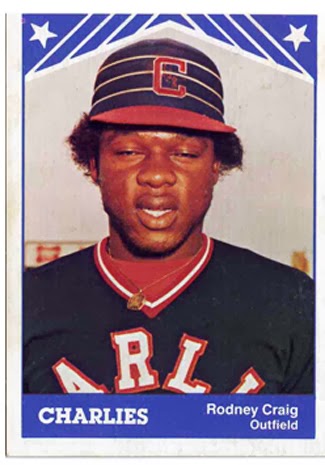
Former Buffalo Bisons' announcer Pete Weber passed along word that former Bison Rodney Craig had been murdered in Los Angeles on Saturday. I hadn't thought of him for a while, but he was certainly one of the most memorable personalities in Bisons history. A few stories came back from the depths of my brain with that terrible report, and they should be told so that his exit isn't the only way he'll be remembered.

Craig had one of those odd baseball careers that don't get much attention but probably deserve it. He was signed by the Mariners as a free agent in 1977, and arrived in Seattle for a September recall in 1979 - where he promptly hit .385. The Mariners were only in their third year at that point, and there wasn't much excitement connected with the team at that point.

Craig's moment in the sun didn't last long. He had a trial with Seattle the next year - 70 games, .238 batting average - and the Mariners sent him back to the minors. The outfielder bounced around a bit, including a stop in the Mexican League, and landed with Buffalo in 1986. He had gone from prospect to suspect.

I covered that team in my radio days, and that might have been the toughest baseball team I've ever seen. You think the '96 Sabres were tough with Ray, Barnaby, May and Boughner? These guys were really tough, and Craig was a leader in such activities.

I remember one game in the Rockpile in which somehow a fight broke out while the Bisons were on the field. Craig came sprinting in from right field to participate, showing the type of speed he rarely displayed while tagging up on a fly ball. Craig wound up to throw a punch at about the second base spot, and connected near the opposing dugout. Daryl Boston, Ivan Calderon and Joe DeSa were on that team as well, and it was good to have all of them on your side when hostilities erupted. Pete's Facebook posting has a couple of notes on how Rodney was a popular teammate.

Craig achieved ever-lasting fame one night when he was ejected from a contest. Suddenly, the story started making the rounds that Craig had talked the mascot into giving him his Buster Bison outfit for the rest of the night. Someone sure was filling out the uniform differently than the usual occupant. Being the fearless reporter I was at the time, I checked with a source in the clubhouse who shook his head up and down and said, "Yes, it was Rodney."

Rodney's best moment, though, came in a different game. At one point Craig airmailed a ball from right field that had fans behind the third-base dugout ducking. But later in that same game, Craig actually threw out someone on the bases. When asked about the play after the game, Craig defiantly said, "My arm is a legend in this league."

That's the type of quote that can come back to haunt you. Even the public address announcer at Bisons game started to call him "Rodney 'The Legend' Craig" when he came up to bat.

I even remember the quote spilling over to softball later that year. One time my team had a game, and a very overweight opponent tagged up from second on a ball hit to our shortfielder in right-center. I swear, Glenn could have sprinted in from his spot in the outfield and beaten this guy to third. Instead, he lobbed the ball to third base for the easiest double play in softball history. As Glenn went back to his position, he yelled, "My arm is a legend in this league."

Craig did some more bouncing after his time in Buffalo, landing in the Mexico League for a while. He apparently retired in 1990, and dropped out of sight. There were stories about drug addiction, so it wasn't a complete surprise that he wound up homeless on the streets of Los Angeles. Craig got into a scuffle with some people, and then was struck and stabbed. No one deserves that sort of ending.

At least, we'll always have one of his minor-league baseball cards, which is all over the Internet as one of the great poses in the history of this particular artform. It is shown above.

May the Legend live on.

Be notified of new posts via Twitter @WDX2BB.

Monday, September 30, 2013

New York Times State of Mind

Word spread around the blogosphere pretty quickly on Sunday - the New York Times had written an editorial saying baseball was becoming irrelevant.

I had visions of the editorial board of the Old Gray Lady of journalism sitting around the office talking about that particular issue. Then I found out that the "editorial" was actually an op-ed piece, meaning it was one person's opinion. In other words, it wasn't the entire newspaper staff that believes baseball has lost its luster. The person in question who does is Jonathan Mahler. You can read his article by clicking here. I'll wait.

The immediate reaction of most people to the headline, even before they read the story, was that this was typical New York City-think. The Yankees had a year to forget, with its longtime stars either leaving or thinking about it. The Mets continued their rebuilding plan for another year, meaning they weren't very good.

I'm not sure how to judge if baseball has fallen out of the national conversation, as Mahler claims. Attendance seems to be quite good, competitive balance is at record levels. Great talents are arriving in droves, including Matt Harvey of the Mets to go along with names like Machado and Trout.

It's tough to argue that television ratings for the World Series, etc., are what they used to be, because they aren't. Yes, I know in a 300-channel universe (for those silly enough to pay for all those channels), there are more ways than ever to divide the audience. So everyone's numbers are worse than they used to be.

Here's what you need to know about that: The ratings for Breaking Bad's finale Sunday smashed records - 10.3 million viewers. The buzz about that show was terrific. Care to guess how many people saw me on "Jeopardy" in 1998? About 15 million.

I do have a theory, though, on what has happened to television ratings for the big events in baseball, basketball and hockey.

We're in an era where virtually every team in those sports has a connection to a television outlet. Here, the Sabres' games are carried on MSG. The Yankees and Nets are on the YES Network, although I'm still trying to figure out how one channel becomes a network. You can watch virtually every game of your favorite team these days.

Contrast that to the "good old days." In New York City, a good chunk of the games of the Yankees and Mets were on home TV, but that was relatively rare. In places outside the major metro areas - and remember we only had 16 teams in 14 cities in 1960 - the Saturday game of the week was pretty much. That made the World Series a major event because you could actually watch a game - well, you could if you were home during the day before night games arrived in the Series in 1971. And if you didn't want to watch those games, well, there were only a couple of other choices on the dial.

Hockey used to be even more restricted in its broadcasting. After 1967, you could get a game of the week on CBS and NBC if you didn't live near a team, and that was it - provided your local station carried it. Many in the South didn't. That even included the playoffs. It's different now. Most people have a rooting interest in a team, and after seeing three games a week for 26 weeks more or less, they may not be in too much of a hurry to see teams they don't care about if the Sabres aren't in the postseason.

Mahler argues that baseball was slow to adapt to changing times coming out of the Fifties, and lost its place to the NFL as the nation's top spectator sport. No argument here. Football also is a great sport for television, and a great sport for gambling, and those two factors have grown hand-in-hand. It's also a once-a-week commitment, event programming that makes a huge difference in interest for a particular game.

One other point here - Mahler has this to say after pointing out that college football and basketball been fed increased interest in their professional counterparts: "Why has college baseball failed to attract any meaningful interest? Mostly because there are already so many professional baseball games to watch."

You mean there aren't many college football and basketball games on television? In football, there's a game on virtually every night of the week, and a couple of dozen on Saturday. When January arrives, it's tough to avoid college basketball. Baseball is a different animal, with some top high school players siphoned off into the minor leagues. and without the tradition the other college sports have. It's apples and oranges.

And for the argument that the baseball draft has much more interest than football and basketball - let those two sports draft 18-year-olds out of high school, and see how much of an event it is.

Baseball isn't in the same spot as it had many years ago, but that's all right. It's still doing quite well by most metrics. You don't have to be a guest columnist for the Times to know that.

Be notified of new posts via Twitter @WDX2BB.

Tuesday, September 10, 2013

Olbermann, again

You can always count on Keith Olbermann to come up with a reason to write a column.

I've stated my admiration for his broadcasting talents in this space in the past. He's a brilliant communicator, someone who simply commands your attention when he's on the air. But Olbermann also has shown over the years that he doesn't suffer fools gladly, and when you are that smart, there are more than a few fools out there.

That's led to a unique career path, that's includes some sports jobs and some news stints over the years. I lost track of Olbermann when he was on Current TV, Al Gore's channel that wasn't on my cable lineup. I'm told that didn't end particularly gracefully either for anyone involved there.

(Tangent: Someone will have to explain to me where people get the money to guarantee that they are able to watch every possible channel at a given moment. I'd don't even particularly like paying $80 for the basic channel lineup of 2 through 70 - with some of those missing. But I digress.)

We wondered what Olbermann's next step would be, and it was a surprise - a return to ESPN. Someone famously described his departure from that outlet as not just burning bridges, but napalming them. Olbermann's reply about his comeback there was along the lines of, when the bridge is out, take tunnel.

He's in his third week of broadcasting now on ESPN2, and it's been a tough time to debut. ESPN has had the rights to the U.S. Open tennis tournament for most of that time, and as we know, no one can predict when such a broadcast will end. So Olbermann has been backed/backed/backed well into the night most of the time.

Therefore, when I've asked a few people if they've seen the show, the answer usually has been no. But thanks to my particular lifestyle, I've caught it a lot. And one word comes to mind when describing it.

Dazzling.

There's a great deal of smarts on display each night, and it comes in a variety of forms. The show often starts with a strong, fairly long segment on a particular issue in sports. A guest frequently turns up to offer opinions on the matter as well. It can be anything from the NCAA's suspension of Johnny Football to soccer in Costa Rica, but so far I haven't seen a bad one.

Then there are the highlights of the night, filled with the attitude and Olbermann and Dan Patrick virtually invented 20 years ago on ESPN. Two other regular features so far are "The Worst Sports Persons in the World," familiar to viewers of Olbermann's "Countdown" show on MSNBC, and "Time Marches On," a newsreel-like group of silly stories.

But there are also good solid interviews along the way, too. The program actually has some authors on the show, and how often do you see authors on television these days? (O.K., I'm biased on this one because of what's in this link, but it's still worth noting.) You can only talk about Tim Tebow's future for so long, and SportsCenter probably has gone past its limit there.

What we've got, then, is Olbermann's old show in a slightly altered form. Tackling sports matters has taken the intensity down a notch at times, and it feels a little less in-your-face. I don't know if the right wingers will ever forgive Olbermann for his nightly liberal viewpoints on the MSNBC show, but that's their problem.

It will be interesting to see if this program evolves in the months to come. Maybe it could become something of a "Nightline," with particularly long segments dedicated to stories that warrant such coverage. No matter how it's done, though, it will be done with plenty of smarts.

Therefore, when I can watch it, I will.

Be notified of new posts via Twitter @WDX2BB.

Thursday, September 05, 2013

The Gamble

I just finished the book, "The Gamble," something of a review of the 2012 Presidential election race from the point of view of political scientists. The authors, John Sides and Lyn Vavreck, have poured over all sorts of numbers and polls from the election cycle, and they came to a conclusion that surprised me quite a bit although it probably shouldn't have done so.

Very little happened during the race in terms of movement.

In other words, the authors could have made a very public guess in December 2011 on what the election would look like almost a year later, based on what the economy was doing at the time. They would have been less than a percentage point off.

In other words, all of those so-called big moments of 2012 really didn't do much in terms of the final outcome. Everything stayed more or less static until Election Day.

All of those ads that those of you in battleground states? The net effect was essentially zero. It's interesting to note that people tend to remember political ads for about a day, and then any slight bump quickly disappears - at least according to the evidence. 

The "47 percent" line from Romney and the "you didn't build that" line from Obama? Didn't have much of a long-term impact.

Obama's performance in the first debate? It gave Romney a small bump, but Obama did better in later debates and the effect evened out.

And so on. The "game-changing events" didn't have an effect for very long. People more or less knew who they were going to receive their vote, even most of the independents, and little changed from those views. If anything, the big events merely hardened the probables to definites.

That's not to say that the billions of dollars spent on the campaign were wasted. If one party had thrown a big party and not spent a dime, there would have been an impact on the final result. But the evidence for 2012 indicates that the two sides essentially cancelled each other out.

If you want to argue that Obama ran another brilliant campaign and that Romney was a poor nominee, be my guest. But the evidence indicates that both did about as well as could be expected. I have often wondered if another Republican politician could have done better as a candidate in 2012. If I'm reading the book correctly, the answer probably is no. A fringe candidate (I guess Rick Santorum or Newt Gingrich might qualify) probably would have done a little worse. Romney was shown to be closer to the majority of the voters ideologically than Obama was, but enough people saw enough steady growth in the economy to be convinced not to change courses.

Who struck me as the "loser" in the book? Those who follow these elections closely for professional reasons. That includes those in the campaign business, such as the endless political strategists who offered public commentary. But it also included media commentators and many media outlets themselves, such as the all-news channels, who have a vested interest in making the election dramatic.You aren't going to get them to say that campaign tactics or perceived gaffes or news analysis doesn't affect voters.

Sides and Vavrick also do some tearing apart of commentators late in the book, when it comes to such things as "mandates." It sounds as if political types are so carried away by electoral victories that they assume everything on a political platform has received a ringing endorsement ... and then they remember that there are still arguments about all sorts of individual issues.

This is not the sort of book that is going to be a big seller, naturally. Political science books never are. There aren't many anecdotes here, which are always interesting to read after the fact. The resulting text comes off as dry. (Reviewer's note: I read a Kindle version of the book for early release in which the charts and tables did not translate to the format. I got the idea of the points from the text, but I'm sure it loses a little when read this way.)

It's certainly good to have such voices as part of the discussion, though. "The Gamble" offers some interesting conclusions about politics, and they are worth your attention if the subject is of interest.

Be notified of new posts via Twitter @WDX2BB.